Falafel
Crisp, golden falafel with bright green, herb-packed centers, made with soaked dried chickpeas and served with a creamy tahini sauce.

Falafel is one of the great street foods of the Middle East. Its origins are debated, but the earliest versions are often traced to Egypt, where it is still made with dried fava beans and called ta'ameya. In the Levant, falafel is made with chickpeas. The key to light, crisp falafel is to use dried chickpeas that have been soaked but not cooked, so the mixture holds together without any flour.
Why this recipe works
- Soaked, uncooked chickpeas. Canned or cooked chickpeas are too soft and wet; the falafel fall apart in the oil. Raw soaked chickpeas have just enough starch to bind.
- Lots of herbs. Parsley and cilantro (coriander) give falafel their bright green interior and fresh flavor.
- A coarse grind. Pulse the mixture until it resembles coarse sand, not a paste. A too-smooth mixture makes dense falafel.
- Baking soda. A little baking soda, added just before frying, makes the falafel lighter and fluffier inside.
Fried or baked
Deep-frying gives the crispest, most authentic result. To bake, brush the patties with oil and bake on an oiled sheet pan at 400°F (200°C) for 25 to 30 minutes, turning halfway. They will be less crisp but still delicious.
How to serve falafel
Tuck them into warm pita with tahini sauce, chopped tomato and cucumber, pickles and hot sauce, or serve them on a platter with hummus and salad. For another vegetarian classic, try our ratatouille.
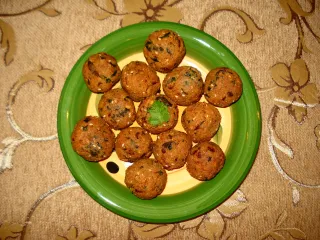
Falafel
Ingredients
For the falafel
For the tahini sauce
Conversions are rounded for convenience. For baking, use the original measurements where possible.
Instructions
Make the mixture
-
Drain the soaked chickpeas well and pat them dry.
-
Put the onion and garlic in a food processor and pulse until finely chopped. Add the chickpeas, parsley, cilantro, cumin, coriander, cayenne, salt and pepper.
-
Pulse, scraping down the sides often, until the mixture looks like coarse sand and holds together when squeezed. Do not process to a paste.
-
Transfer to a bowl, stir in the sesame seeds, cover and refrigerate for at least 1 hour.
Make the tahini sauce
-
Whisk the tahini, lemon juice, garlic and salt. It will seize and thicken; whisk in cold water a tablespoon at a time until smooth and pourable.
Shape and fry
-
Stir the baking soda into the falafel mixture. Shape into balls or small patties about 1½ inches (4 cm) across, pressing firmly.
-
Heat the oil to 350°F (175°C) in a deep, heavy pot. The oil should be at least 2 inches (5 cm) deep.
-
Fry the falafel in batches of 5 or 6 for 3 to 4 minutes, turning, until deep golden brown and crisp.
-
Drain on a wire rack set over paper towels. Serve hot with the tahini sauce.
Notes
- Fry one test falafel first. If it falls apart, pulse the mixture a little more or add 1 to 2 tablespoons of chickpea flour.
- Keep children and pets away from hot oil, and never leave it unattended.
Tips
- A falafel scoop or small ice cream scoop makes shaping quick and even.
Substitutions
- Fava beans: use half dried, skinned fava beans for a fluffier, Egyptian-style falafel.
- Herbs: add a handful of fresh dill or mint.
Storage and reheating
- Refrigerate cooked falafel for up to 3 days and reheat in a hot oven to re-crisp.
- Freeze uncooked shaped falafel for up to 3 months and fry from frozen, adding 1 to 2 minutes.
Reviews
No reviews yet. Made this recipe? Be the first to share how it went.
Leave a review
You might also like

Vegetarian
Ratatouille

Vegetarian
Mushroom Risotto

Around the World
Chicken Enchiladas Verdes

Pies & Casseroles